

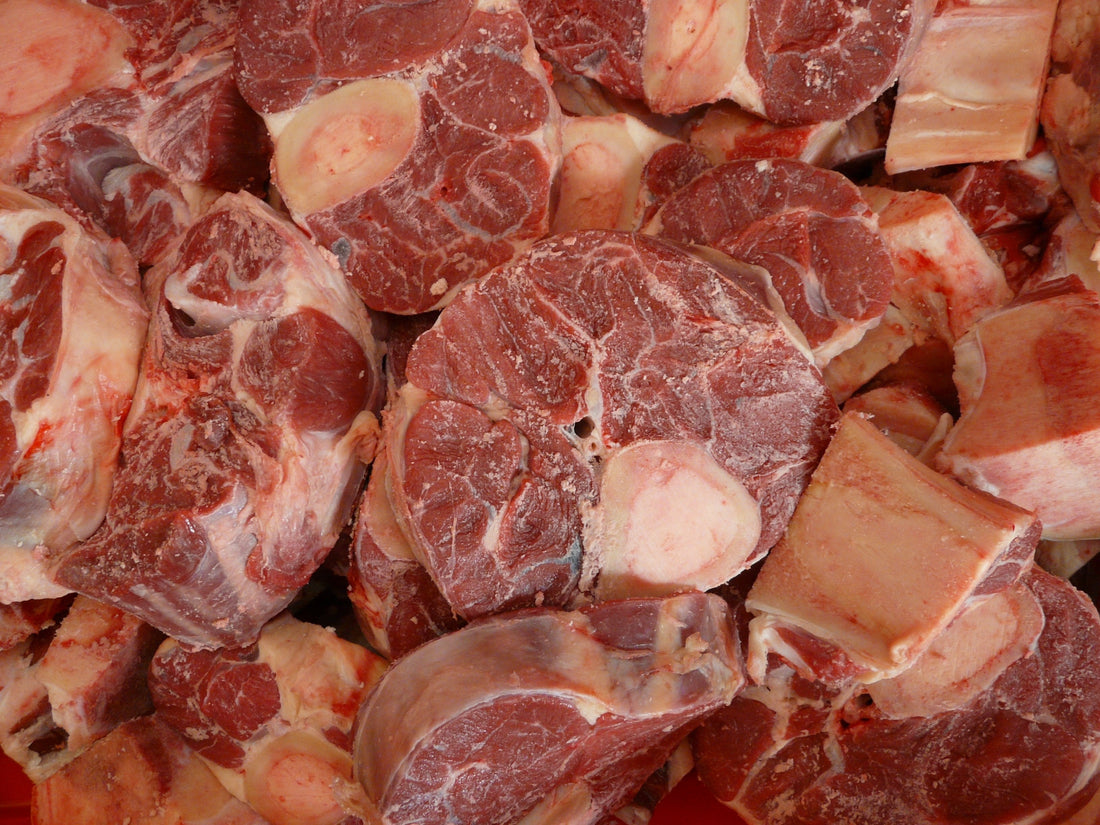
Beef Bones 101: What to Buy and What to Cook

Jump to a section
Stand at a good butcher counter and you'll see marrow bones, knuckles, oxtail, shank, and a bin of mixed "soup bones." They don't do the same thing. Some bring gloss and gel, some bring meat, some bring that spoonable richness, and picking wrong leaves your stock thin. Below: every beef bone worth buying, what it does in the pot, and how to cook it.
Quick version: joint-heavy bones (knuckles, feet, oxtail) bring collagen and gel. Marrow bones bring richness. Shank and neck bring meat and body. The rule for a great pot is to build around joint bones for the set, then add a marrow bone or two for richness. If you want the longer breakdown of how a stock differs from a broth, we cover the difference between broth and stock separately.
Marrow bones
What they are: Center-cut femur bones, either cross-cut into rounds or split canoe-style to expose the marrow. Best for: Roasting and spreading on toast, finishing sauces, adding richness to stock, and our personal favorite, marrow butter. Why use them: Marrow melts soft and rich. It brings richness, not gel, so it won't set a pot on its own. How to use: For marrow, roast at about 450°F for 15 to 20 minutes, until it bubbles at the surface and a skewer slides in with no resistance. For marrow butter, mix 2:1 butter to marrow when the butter is soft, then keep it in the fridge. For stock, roast the scraped-out bones and add them to the pot with meaty and joint bones. A little goes a long way.
Knuckle bones
What they are: Joint bones with cartilage, tendons, and connective tissue. Best for: Any stock or broth where you want natural gel and a glossy mouthfeel, demi-glace bases, pho-style broths. Why use them: This is your collagen workhorse. It's how you get stock that sets in the fridge. How to use: Blanch briefly to clear impurities, roast for deeper flavor, then give them time at a gentle simmer. Pressure-cooker fans, this is your MVP bone.
Meaty neck bones
What they are: Vertebrae from the neck with a generous halo of meat. Best for: Soup and ragu where you want both body and meat you can shred back into the pot. Why use them: Neck bones pull double duty. They flavor the broth and pay you back with tender, deeply seasoned meat. How to use: Brown hard for fond (the savory browned bits left in the pan), then simmer until the meat slips from the bone. Skim, strain, pick the meat, and return it to the soup or sauce.
Shank bones
What they are: Cross-cut shanks that include bone, marrow, and tough working muscle. Best for: Osso buco style braises, rich soups, balanced brown stock. Why use them: You get a little of everything. Marrow for richness, connective tissue for body, meat for flavor. How to use: Brown, deglaze, and braise gently until spoon-tender. For stock, combine with knuckle bones to boost the gel.
Oxtail
What it is: The tail, cut into discs through the vertebrae, with lots of connective tissue and marbled meat. Best for: Soups, stews, ramen bases, anything slow and cozy. Why use it: Off-the-charts flavor and collagen. The meat goes silky and the broth turns lush. How to use: Brown thoroughly, then settle in for a slow simmer until the meat falls apart. Skim as you go or at the end, then strain and shred.
Rib and back bones
What they are: Bones from rib roasts, short ribs, or the backbone. They often come with roasted bits or smoky edges if you saved them from a cookout. You won't get a collagen-heavy broth, but the flavor runs deep. Best for: Brown beef stock, French onion soup base, gravy with attitude. Why use them: Big roasted flavor. Less gelatin than knuckles, more character than bare marrow bones. How to use: Roast to deepen the color, then build a classic brown stock with onion, carrot, and celery.
Feet or "trotter" bones
What they are: Hoof-end bones packed with cartilage and connective tissue. Harder to find, worth the hunt. Best for: Turbocharging gel in any stock. Why use them: They are pure body. One foot can set a whole pot. How to use: Blanch, then simmer low and slow. Combine with meaty bones so you get flavor plus structure.
One foot can set a whole pot.
Soup bones or mixed bones
What they are: A butcher's mix of odds and ends, or the bag in your freezer where bones from other meals pile up. Usually some meaty pieces and a few joint sections. Best for: Everyday stock when you want a simple, affordable base. Why use them: Easy, flexible, economical. How to use: Roast, then simmer with aromatics. If the mix looks light on joints, add a knuckle to help the set. This is the bag we reach for when we make an everyday beef stock on a weeknight.
What to cook with beef bones (besides stock)
Bones aren't only a stock project. A few of our go-to moves once you have the right cuts:
- Roasted marrow on toast. Roast cross-cut or canoe marrow bones, then spread the soft marrow on grilled bread with flaky salt and a little herb salad. Five minutes of effort, steakhouse payoff.
- Neck-bone soup with greens and white beans. Brown the necks, simmer until the meat shreds, then build a brothy bowl with hearty greens and beans.
- Shank and barley stew. Braise shanks low and slow with barley until the whole thing eats like a hug.
- Oxtail noodle soup. Slow-simmer oxtail into a lush broth, then finish with noodles, scallions, and chili crisp.
For more ways to put a finished pot to work across the week, we keep a running guide to cooking with bone broth.
Where to buy beef bones
You have three good options, in rough order of quality and effort:
- A butcher counter. The best source. A butcher can cross-cut marrow bones, split canoe bones, and set aside knuckles and feet that rarely make it to the case. You also get to ask where the beef came from.
- The grocery meat case. Most stores carry marrow bones and "soup bones," usually bagged and frozen. Convenient, but you take what's there and the labeling is vague.
- Online and specialty farms. Good for joint-heavy cuts like knuckles and feet that local stores skip, and for sourcing you can actually trace.
Quality matters more than people expect here, because a stock concentrates whatever you started with. We build our 100% grass-fed beef demi-glace from pasture-raised bones for exactly that reason: better bones make a better reduction.
Making bone broth specifically, rather than an all-purpose stock? We break down the exact buying list for that in our guides to the best beef bones for bone broth and the best chicken bones for bone broth.
Once you know what each bone does, buying beef bones gets easy: grab joints for gel, marrow for richness, meaty cuts for body, and let the pot do the rest. And when you want that bone-deep flavor without the day-long simmer, a spoonful of our demi-glace gets you most of the way there.
FAQ
Shop the products in this post
Common questions
Which beef bones gel the most?
Knuckles, feet, and oxtail. They are joint-heavy and collagen-rich, so the stock sets to a soft gel when chilled. Marrow bones add richness but contribute less structural collagen, so they will not gel a pot on their own.
Do I have to roast beef bones before making stock?
No, but roasting deepens color and flavor for a brown stock. Roast at about 450°F until the bones are well browned, then build the pot. Skip the roast for a lighter, more neutral stock.
What is the difference between marrow bones and knuckle bones?
Marrow bones are cut femur sections full of soft marrow that melts into richness. Knuckle bones are joints full of cartilage and collagen that set the stock to a gel. Use marrow for richness, knuckles for body.
How many pounds of beef bones do I need per quart of stock?
About one pound of bones per quart of water is a solid starting ratio. Add a knuckle or a foot to boost the gel if your mix is light on joints.
Can I reuse beef bones for a second batch of stock?
You can. The second batch, called a remouillage, comes out thinner than the first. Add a fresh joint bone to give it body.
Recent Articles


